
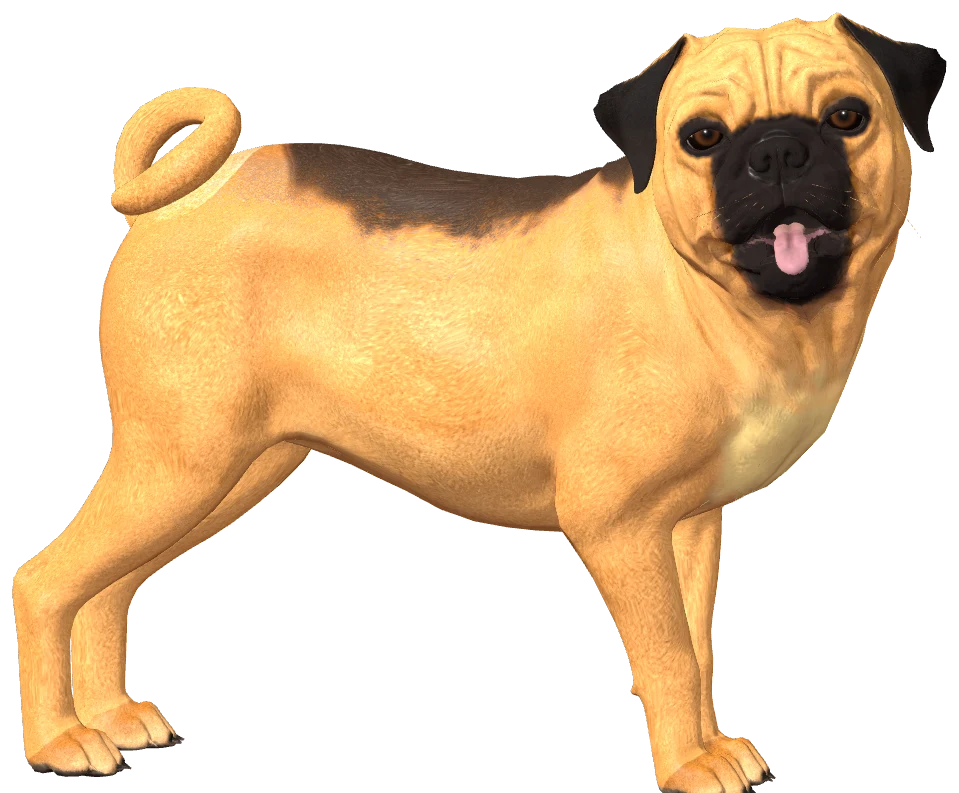
A small but substantial toy dog with a short, fine coat in fawn, apricot or silver with a black mask, or all black.
At a glance
A small but substantial toy dog with a short, fine coat in fawn, apricot or silver with a black mask, or all black. Pugs stand around 25 to 33 cm, weigh about 6 to 8 kg and usually live past ten years. They are affectionate, sociable and funny, need up to an hour of gentle exercise a day, and as a flat-faced breed need careful health care. Sillmates makes the Pug as a desktop pet companion for Mac and Windows, in Fawn, Apricot and Black coats.
History and origin
Pugs originated in China in ancient times, where the Chinese passion for short-faced, small breeds may well have shaped them. They were developed as lap dogs rather than any sort of working dog, and the vertical forehead wrinkles were thought to resemble the Chinese mark for "Prince". In the 16th century, traders from the Dutch East India Company are thought to have taken dogs of this type to the Netherlands, which became the Pug's adopted homeland. The Pug became the official dog of the House of Orange because Pugs sounded the alarm at the approach of invading soldiers in 1572. When William of Orange took the English throne his Pugs came with him, and the breed became the most popular royal dog in England during Victorian times. It was known as Mopshond in Holland, Mops in Germany, and the Dutch or Chinese pug in England.
Temperament and personality
Pugs are affectionate, sociable dogs that thrive on human company. They are known for their clownish behaviour and sense of humour, and are typically friendly with strangers and usually good with other dogs and household pets. Despite their comical, easy-going reputation they are intelligent and can be strong-willed: a Pug is willing to please but does not like to be forced, which brings out its stubborn streak, so positive, reward-based training works best. They love people and company so much that they do not cope well with being left alone.
Size and build
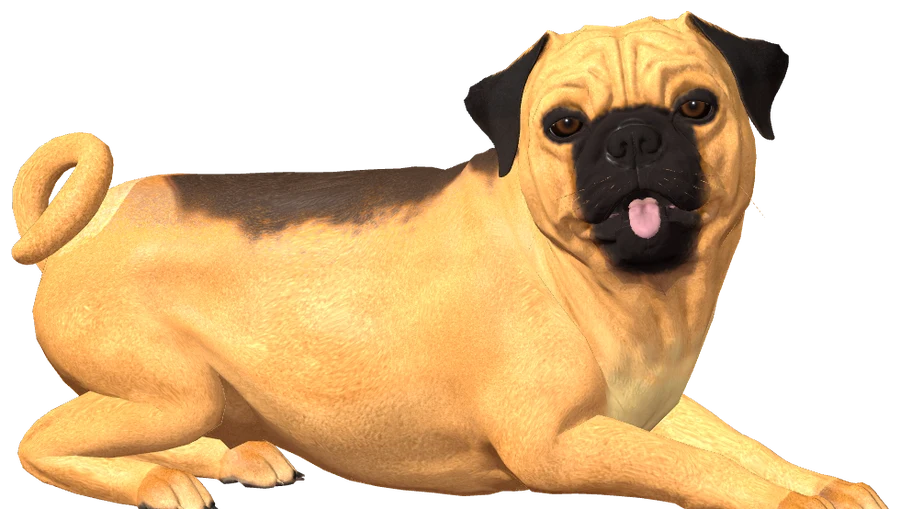
The Pug is the most substantial of the toy breeds, earning the motto multum in parvo, a lot of dog in a small frame. The American Kennel Club gives a height of 10 to 13 inches and a weight of 14 to 18 pounds, and the PDSA an average height of 25 to 33 cm and weight of 6 to 8 kg. The face is short and flat, with abundant, wrinkled skin, which makes the Pug a severely brachycephalic (flat-faced) breed.
Coat and colours
The coat is fine, smooth and short. The Royal Kennel Club breed standard colours are fawn with black mask, apricot with black mask, silver with black mask, and black. The famous facial wrinkles were an essential breed feature from the start.
Exercise and play
A Pug makes a calm and alert housedog and needs up to an hour of exercise a day: shorter walks, a very short jog or a quick game, plus playtime and brain-stimulating activities such as obedience and trick training. It is not physically suited to overly vigorous exercise and can easily become out of breath. Several short walks through the day stop it getting too tired or overheated. Pugs overheat easily and are at higher risk of heatstroke, so in warm weather walk early in the morning or later in the evening, and stop and rest as soon as your Pug struggles to breathe.
Grooming and care
Even though the coat is short, Pugs shed a lot, and shedding is above average. Luckily they tend to love being groomed, because it means plenty of attention. The face wrinkles need regular cleaning and drying to prevent skin infections. Pugs tend to become obese, and extra weight makes breathing problems worse, so feed a balanced diet and cut calories if your dog starts to gain.
Health and lifespan
The American Kennel Club gives a life expectancy of 13 to 15 years and VCA Hospitals 12 to 15 years; the PDSA and The Royal Kennel Club say over 10 years. Because of their flat faces, Pugs are classed as Category Three by The Kennel Club, the highest level of concern about conformation, covering breathing, eye and skin problems. Conditions the PDSA lists include brachycephalic obstructive airway syndrome (BOAS), eye problems such as dry eye and corneal ulcers, skin fold infections, luxating patellas, Pug dog encephalitis and hemivertebrae. The Royal Kennel Club recommends breathing tests under its Respiratory Function Grading scheme and eye testing before breeding. If you choose a Pug, look for a dog with a longer nose and fewer face folds, and speak to a vet if you hear snorts, snores or loud breathing.
Living with one
Pugs often get on well with children, especially playful ones; VCA Hospitals calls them playful, affectionate and gentle with children. Keep an eye on play so neither side gets too boisterous, and teach children to approach dogs with care. They usually get along well with other dogs and household pets. The Royal Kennel Club rates them as fine in a flat or apartment. The main thing a Pug needs is company: the PDSA advises never leaving one alone for longer than four hours, and if you are out most of the day a Pug is unlikely to be the right pet.
Fun facts
Pugs raised the alarm as invading soldiers approached in 1572, and the breed became the official dog of the House of Orange. Napoleon's wife Josephine used her Pug to carry messages while she was imprisoned. And the forehead wrinkles were said to look like the Chinese character for "Prince".
About the Pug
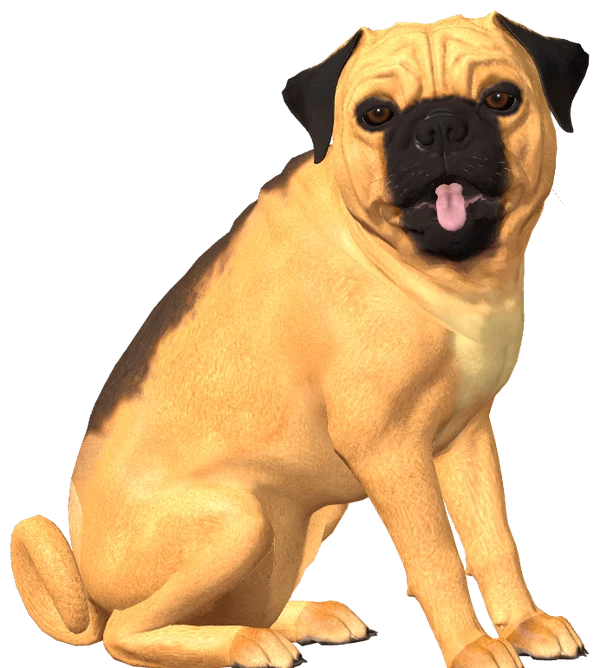
At a glance.
- Origin
- China (developed further in the Netherlands)
- Group
- Toy (Royal Kennel Club and AKC)
- Height
- 25–33 cm
- Weight
- 6–8 kg
- Lifespan
- 12-15 (sources: 13-15 and 12-15) years
- Coat
- Fine, smooth and short
- Colours
- Fawn with black mask, Apricot with black mask, Silver with black mask, Black
11
Questions about
the Pug.
Are Pugs good with children?
Often, yes. They are playful, affectionate and gentle, but play should be supervised so neither the Pug nor the child gets too boisterous.
Why do Pugs snore and have breathing problems?
Pugs are a severely flat-faced breed, and many have brachycephalic obstructive airway syndrome (BOAS). Snorts, snores and loud breathing can be signs of it, so speak to a vet if you hear them.
How much exercise does a Pug need?
Up to an hour a day, in several short, gentle walks plus play. Avoid heat and vigorous exercise, as Pugs overheat easily.
Do Pugs shed?
Yes, more than average for a short coat. Regular brushing helps, and the face wrinkles need cleaning and drying.
What colours do Pugs come in?
The Royal Kennel Club breed standard colours are fawn, apricot and silver, each with a black mask, and black.
Can Pugs be left alone?
Not for long. Pugs adore company, and the PDSA advises never leaving one alone for longer than four hours.
12 · Sources
akc.org/dog-breeds/pugvcahospitals.com/know-your-pet/dog-breeds/pugpdsa.org.uk/pet-help-and-advice/looking-after-your-pet/puppies-dogs/small-dogs/pugroyalkennelclub.com/search/breeds-a-to-z/breeds/toy/pug