
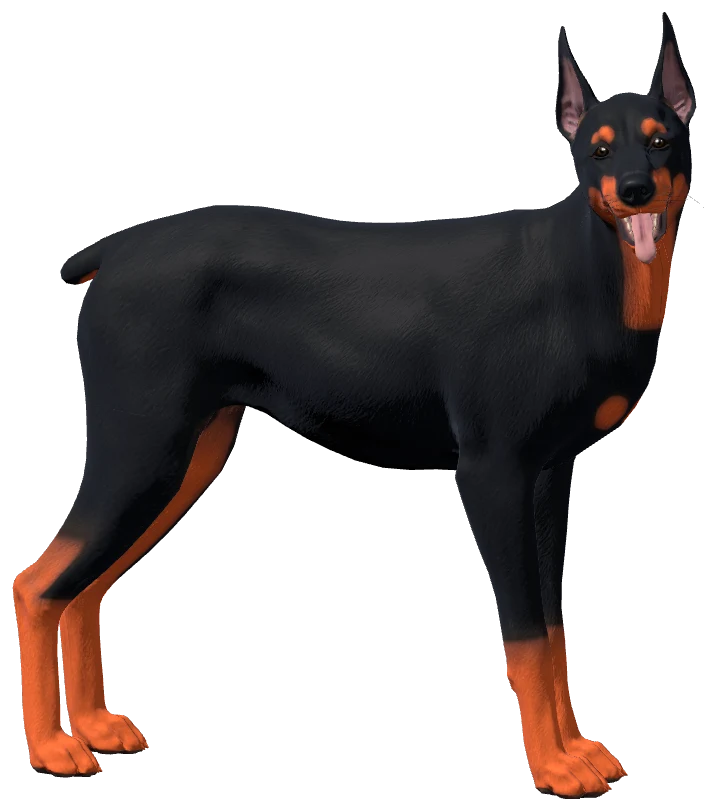
The breed takes its name from the man who developed it: Louis Dobermann, a tax collector in Apolda, Germany.
At a glance
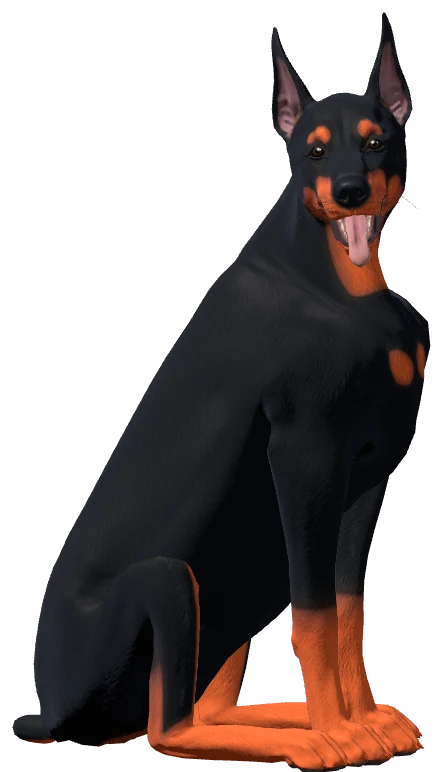
A large, short-coated, athletic dog with a clean outline, a wedge-shaped head and a keen expression. Dobermans usually stand about 61 to 71 cm tall, weigh around 30 to 40 kg and live about 10 to 12 years. They are intelligent, energetic and protective, and they need a lot of exercise and company. Sillmates makes the Doberman as a desktop pet companion for Mac and Windows, in a Black coat.
History and origin
The breed takes its name from the man who developed it: Louis Dobermann, a tax collector in Apolda, Germany. He travelled door to door with money and wanted a fierce-looking dog to protect him and deter robbers. Using a foundation of Pinscher-type dogs and other breeds, he had established the type he wanted by the late 19th century: a squarely built dog with a clean outline. By 1899 a breed club had been formed, and the German Kennel Club recognised the breed that same year. The first Doberman Pinscher arrived in America in 1908. Since then the breed's intelligence and trainability have been used by the armed forces and the police, in roles including guarding and tracking.
Temperament and personality
Dobermans are loyal and protective, and they form strong bonds with their families. They are very intelligent and eager to learn, but they can be a little wilful, so they do best with consistent, firm but fair, reward-based training. Because they were bred for guarding, they may be more vocal when someone new arrives, although the PDSA notes they are not known to bark excessively. Early socialisation with different people, places and dogs is important, because the breed has a strong guarding instinct and can be wary of other dogs.
Size and build
This is a large, muscular dog. The American Kennel Club gives a height of 26 to 28 inches for males and 24 to 26 inches for females, with weights of 75 to 100 pounds for males and 60 to 90 pounds for females. VCA gives an overall height of 24 to 28 inches and a weight of 65 to 90 pounds, and the PDSA gives an average weight of 30 to 40 kg. They are the largest of the Pinschers.
Coat and colours
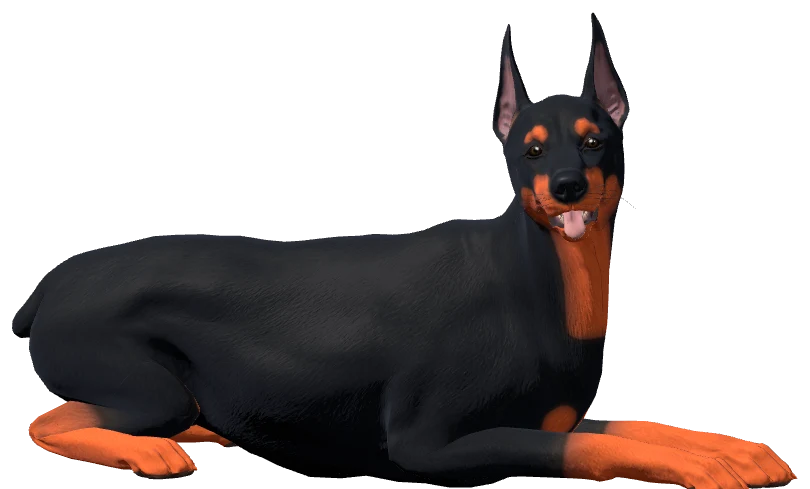
The coat is short, smooth and close-lying. The Royal Kennel Club breed standard colours are black, blue, brown and fawn (Isabella), each with rust red (tan) markings. Black and tan is the colour most people picture. Dobermans shed more in spring and autumn.
Exercise and play
Dobermans are very active dogs. The PDSA recommends a minimum of two hours of exercise every day, ideally spread across the day rather than done in one go. Long walks, running in safe areas, fetch and training games all help, and mental work matters as much as physical work. Without enough exercise a Doberman may start chewing things out of boredom.
Grooming and care
Grooming is simple: the very short coat only needs brushing around once a week. Despite their tough reputation, Dobermans are very sensitive to the cold, so a warm coat on winter walks and a cosy bed indoors are a good idea. Diet changes with age, and your vet can tell you how much your Doberman should be eating.
Health and lifespan
The American Kennel Club and VCA both give a life expectancy of 10 to 12 years. The PDSA lists conditions that can affect the breed, including hip dysplasia, Wobbler syndrome (instability of the bones in the neck), dilated cardiomyopathy (a type of heart disease), von Willebrand's disease (a bleeding disorder), gastric dilatation volvulus or 'bloat', hypothyroidism, an eye defect called PHPV, and certain cancers. Not every Doberman will develop these. Choose a puppy whose parents have had the relevant health screening, learn the signs of bloat, and see your vet for regular check-ups, including heart checks.
Living with one
Dobermans flourish in active households where they can be involved in everything. They get very attached to their owners, and the PDSA says no dog should be left alone for more than four hours; some Dobermans struggle even with that. Because of their size and strength, the PDSA does not recommend the breed for homes with young children, and play with children should always be supervised. With good socialisation they can live happily with other dogs, but their prey drive means they should not be left unsupervised with smaller pets.
Fun facts
The breed was created by a tax collector. Dobermans are so clever that they have been known to outsmart inexperienced trainers. For all their toughness, they really feel the cold. Dobermans served bravely in the Second World War.
About the Doberman
At a glance.
- Origin
- Germany (Apolda)
- Group
- Working (Royal Kennel Club and AKC)
- Height
- 61–71 cm
- Weight
- 30–40 kg
- Lifespan
- 10–12 years
- Coat
- Short, smooth and close-lying
- Colours
- Black and tan, Blue and tan, Brown and tan, Fawn (Isabella) and tan
11
Questions about
the Doberman.
Are Dobermans good family dogs?
They can be calm, loyal family dogs with the right training, but they are large and energetic, so the PDSA does not recommend them for homes with young children.
How much exercise does a Doberman need?
At least two hours a day, spread across the day, plus training and games to keep the mind busy.
How long do Dobermans live?
The American Kennel Club and VCA both give a life expectancy of 10 to 12 years.
Why is it called a Doberman?
It is named after Louis Dobermann, a German tax collector who developed the breed to protect him on his rounds.
Do Dobermans feel the cold?
Yes. Their short, thin coat means they are very sensitive to the cold, so they appreciate a coat in winter.
12 · Sources
akc.org/dog-breeds/doberman-pinschervcahospitals.com/know-your-pet/dog-breeds/doberman-pinscherpdsa.org.uk/pet-help-and-advice/looking-after-your-pet/puppies-dogs/large-dogs/dobermannroyalkennelclub.com/search/breeds-a-to-z/breeds/working/dobermann