
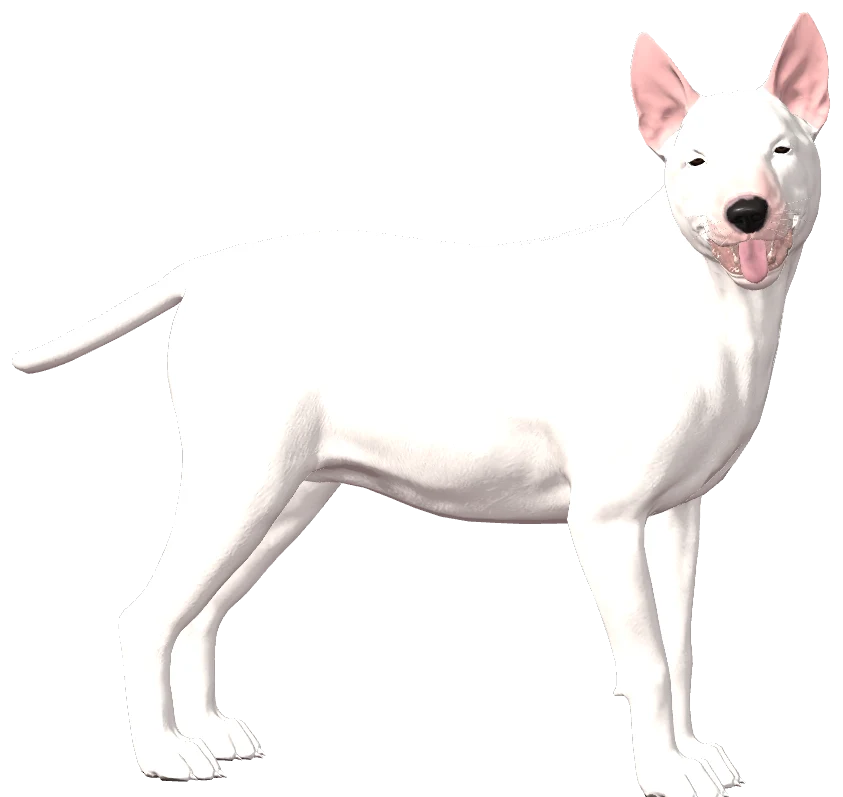
The Bull Terrier is muscular and solid for its size.
At a glance
A medium-sized, strongly built, short-coated terrier with a distinctive 'Roman' nose profile and triangular eyes. Bull Terriers usually stand about 53 to 56 cm tall, weigh around 23 to 31 kg and live about 12 to 13 years. They love people, have bags of energy and suit experienced, patient owners. Sillmates makes the Bull Terrier as a desktop pet companion for Mac and Windows, in White and Red coats.
History and origin
The breed comes from Birmingham in England. Around 1860, James Hinks crossed the old bull and terrier type with the White English Terrier and the Dalmatian, producing an all-white strain he called the bull terrier, and the Royal Kennel Club credits him with stabilising the type; some suggest Collie blood was also added to lengthen the muzzle. The white dogs were nicknamed the 'white cavalier' for their chivalrous, brave nature. Around 1900 colour was reintroduced by crossing with Staffordshire Bull Terriers, and in the 1920s coloured Bull Terriers became more common, which helped the breeding programme because deafness had become a problem in all-white dogs. In 1936 the breed was split into two varieties, white and coloured.
Temperament and personality
Bull Terriers love people. The PDSA calls them the clowns of the dog world because of their fun personalities and mischievous nature, and VCA describes them as playful and good with children. They can be strong-willed, so training needs to be firm but fair, consistent and reward-based from day one, with everyone in the home following the same rules. VCA notes that some Bull Terriers can show compulsive behaviour, so plenty of exercise and mental stimulation is important.
Size and build
The Bull Terrier is muscular and solid for its size. The American Kennel Club and VCA both give a height of 21 to 22 inches and a weight of 50 to 70 pounds, while the PDSA gives an average height of 51 to 61 cm and an average weight of 22 to 31 kg. The long head with its 'Roman' nose profile is the breed's trademark.
Coat and colours
The coat is short and easy to keep. The Royal Kennel Club accepts a wide range of colours, including white, white with head markings, red, red and white, fawn, brindle, black brindle and tricolour. Coloured dogs played an important part in reducing deafness in the breed.
Exercise and play
The PDSA recommends at least one hour of exercise a day for a Bull Terrier. Because some Bull Terriers can be nervous or even aggressive around other dogs if not socialised, early and ongoing socialisation is especially important.
Grooming and care
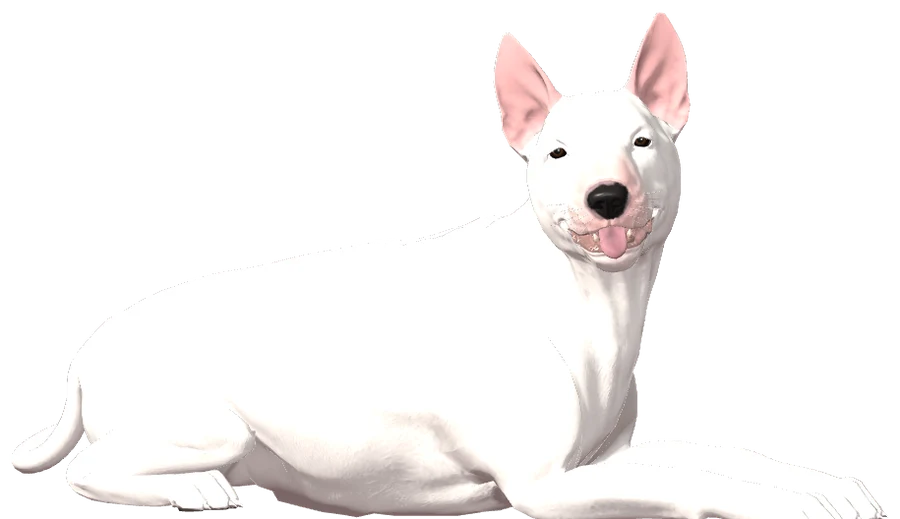
Bull Terriers have fairly low-maintenance coats, and the PDSA says a brush once a week should be enough to keep the coat healthy and shiny. If you use treats for training, take them into account and reduce the daily food allowance.
Health and lifespan
The American Kennel Club gives a life expectancy of 12 to 13 years and VCA gives 11 to 14 years. The PDSA lists the main conditions to know about: deafness, which can be screened for with a BAER hearing test; lethal acrodermatitis, a genetic disease affecting only white Bull Terriers, for which a DNA test screens carriers; kidney and heart problems, which parents can be screened for with urine tests and heart scans; and luxating patellas, where the kneecaps slip out of place. The Kennel Club also lists the breed in Breed Watch Category Two because the 'Roman' nose can stop the teeth lining up properly. Buy from a breeder who health tests, and see your vet if you have any concerns.
Living with one
A Bull Terrier is a great companion for experienced owners who have the patience to train it. The PDSA says they are better with older children because they can be excitable, and that play should always be supervised so it doesn't get rough. A well-socialised Bull Terrier is far more relaxed around other dogs.
Fun facts
A Bull Terrier called Spuds starred in beer adverts in the 1980s, and a Bull Terrier is the face of the Target stores in America. The breed is popular with royalty: Princess Anne has owned Bull Terriers. They are one of the few recognised breeds with triangular eyes.
About the Bull Terrier
At a glance.
- Origin
- England (Birmingham)
- Group
- Terrier (Royal Kennel Club and AKC)
- Height
- 53–56 cm
- Weight
- 23–31 kg
- Lifespan
- 12–13 years
- Coat
- Short and low-maintenance
- Colours
- White, Red, Red and white, Fawn, Brindle, Black brindle, Tricolour
11
Questions about
the Bull Terrier.
Are Bull Terriers good with children?
They are playful and love people, but because they can be excitable the PDSA says they are better with older children. Always supervise play.
Why do Bull Terriers have such long heads?
The long head with its 'Roman' nose is the breed's signature look. It can affect how the teeth line up, which is why the Kennel Club keeps an eye on it.
Are white Bull Terriers prone to deafness?
Deafness can occur, especially in white dogs. Puppies can be hearing tested with a BAER test.
How much exercise does a Bull Terrier need?
At least one hour a day, plus games and training to keep their minds busy.
Is a Bull Terrier a Pit Bull?
No. The Bull Terrier is its own recognised breed, though VCA notes it is sometimes confused with pit bulls.
12 · Sources
akc.org/dog-breeds/bull-terriervcahospitals.com/know-your-pet/dog-breeds/bull-terrierpdsa.org.uk/pet-help-and-advice/looking-after-your-pet/puppies-dogs/medium-dogs/english-bull-terrierroyalkennelclub.com/search/breeds-a-to-z/breeds/terrier/bull-terrier